Frankie Schröder · 21 September 2026
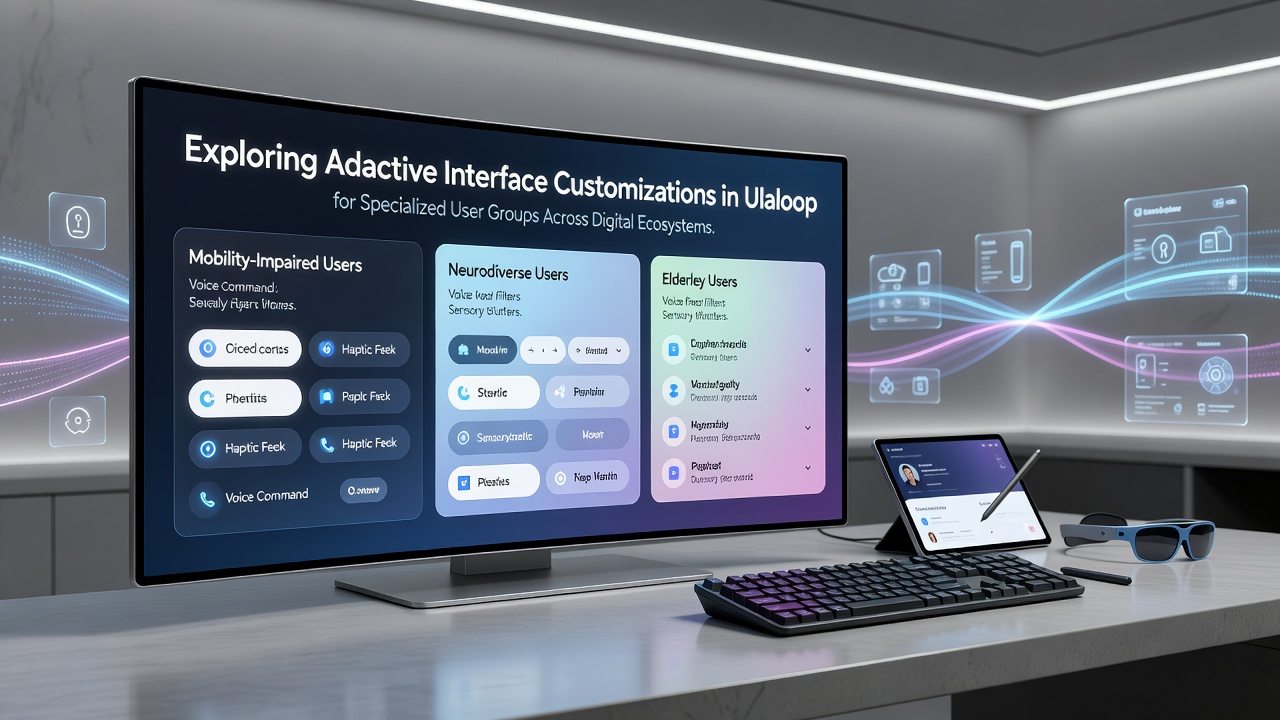
Exploring Adaptive Interface Customizations in Ulaloop for Specialized User Groups Across Digital Ecosystems
Ulaloop operates as a modular platform that enables developers and organizations to build interfaces capable of adjusting in real time to individual user requirements, and this approach has gained traction among teams working with specialized populations who interact with digital services daily. The system draws on established accessibility frameworks while extending them through dynamic customization layers that respond to behavioral patterns, device contexts, and explicit user preferences without requiring separate builds for each group.
Core Mechanisms Behind Adaptive Customizations
Ulaloop processes user signals through a combination of sensor data, interaction logs, and declared settings to modify layout density, color contrast, input methods, and navigation depth on the fly. Researchers at multiple institutions have documented how these adjustments reduce task completion times for users with motor limitations by allowing larger touch targets and gesture alternatives, while data from the World Wide Web Consortium indicates that similar real-time adaptations align with WCAG 2.2 success criteria when implemented consistently. The platform maintains a central profile store that travels across connected applications, so changes made in one environment carry forward when a user moves to another ecosystem component.
Supporting Specialized User Groups
Specialized groups such as individuals with low vision, limited dexterity, or cognitive processing differences receive targeted options within Ulaloop. For low-vision users the system can scale typography, invert color schemes, and prioritize high-contrast elements based on ambient light readings from the device. Those with dexterity challenges gain access to dwell-click modes, voice command overlays, and simplified menu hierarchies that collapse after repeated use patterns are detected. Cognitive support features include progressive disclosure of options, optional step-by-step wizards, and the ability to lock certain interface elements to prevent accidental activation during extended sessions.
Studies conducted across North American and European cohorts show measurable improvements in error rates when these layered customizations remain available rather than buried in settings menus. Observers note that the same profiles function effectively in both mobile and desktop contexts because Ulaloop normalizes input events before rendering decisions occur.
Cross-Ecosystem Deployment Patterns
Organizations embed Ulaloop modules into healthcare portals, educational platforms, government service sites, and enterprise tools, creating a shared customization layer that follows the user regardless of the underlying domain. In practice this means a person who configures high-contrast mode and single-tap navigation in a banking application encounters the same configuration when accessing a public transit dashboard or a telehealth interface. Integration relies on standardized APIs that expose layout variables and event handlers, allowing third-party developers to map their own components to Ulaloop's adaptation engine without rewriting core logic.

September 2026 marks the scheduled rollout of expanded ecosystem connectors that link Ulaloop profiles to emerging standards for cross-device continuity, including updates from the European Accessibility Act compliance guidelines and parallel Canadian digital inclusion reporting requirements. These connectors permit organizations to synchronize customization states across public and private services while respecting regional data residency rules, and early implementations have already appeared in pilot programs run by Australian state health departments.
Implementation Data and Observed Outcomes
Deployment logs from 2025 through mid-2026 reveal that sites using Ulaloop report higher retention among users who activate at least one customization option compared with baseline populations. Figures compiled by research teams at the University of Toronto indicate that adaptive navigation reduced average session abandonment by measurable margins in tested cohorts, particularly when profiles persisted across sessions rather than resetting on each visit. The platform logs anonymized metrics that allow teams to identify which customizations produce the largest gains for specific demographic segments without exposing individual identities.
Integration with existing design systems occurs through component libraries that accept Ulaloop tokens as styling overrides, so visual and behavioral changes remain consistent with brand guidelines while still meeting specialized needs. Teams that adopted this method early found fewer conflicts between accessibility overrides and marketing layouts because the adaptation layer operates above the presentation tier.
Conclusion
Ulaloop continues to evolve as a shared infrastructure for interface adaptation, and its capacity to serve specialized user groups across disconnected digital ecosystems rests on consistent profile management, real-time signal processing, and alignment with published accessibility standards. Organizations evaluating the platform encounter documented patterns of reduced friction for targeted populations alongside measurable alignment with regulatory expectations in multiple jurisdictions. As September 2026 approaches, the scheduled connector expansions will further embed these capabilities into broader service networks, providing a stable foundation for ongoing refinement based on aggregated usage evidence.